Introduction
Sports Connections is a sports-themed puzzle game that challenges players to find hidden links between words on a compact board. In each round of Sports Connections you face a 16-word grid and the goal is to group those words into four related sets of four items each, using logic, memory and general sports knowledge rather than speed. The game is presented as short, focused rounds where up to four mistakes are allowed before a round ends, which creates a deliberate tension that rewards careful thinking and pattern recognition.
Gameplay mechanics
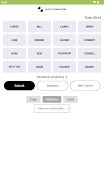
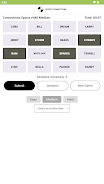
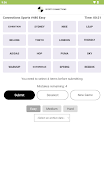
The core mechanic in Sports Connections is grouping: the board displays sixteen terms that may include athletes, teams, events or sport-specific jargon, and you must identify which four words belong together. Interaction is simple and intuitive — tap to select a word and tap additional words to build a candidate group, then confirm your choice to lock that group and reveal the remaining words. When a selection is incorrect it counts toward the four-mistake limit for the round, encouraging players to weigh possibilities instead of guessing wildly. Rounds are quick but deliberately designed to escalate in subtle ways: early puzzles focus on obvious associations, while later boards introduce mixed sports and more abstract links.
Controls and user experience
The controls keep the experience accessible on touch devices: single taps select terms and a dedicated confirm action completes a proposed group, with an option to clear a selection before confirming. The interface avoids complex gestures, so the emphasis stays on thinking rather than mastering controls. Visual feedback highlights selected words and provides immediate confirmation when a correct group is found, helping players track progress during a short round. Menus and prompts are concise, and the pacing favors repeated short plays rather than long sessions.
Progression and challenge systems
Progression in Sports Connections comes from puzzle variety and difficulty scaling rather than levels tied to points or currencies. Puzzles grow more challenging through looser associations, cross-sport references, and the introduction of more obscure terms as you advance. The fixed four-mistake allowance functions as the primary challenge system, forcing strategic choices about when to commit to a group. Because each puzzle is self-contained, players can make steady progress by improving pattern recognition and sports knowledge across repeated rounds.
Level structure and replay value
Each play session is composed of independent rounds with a fresh 16-word board; this short-round structure makes the game easy to pause and resume between other activities. Replay value stems from the large combination of possible word sets and the way word relationships can be presented in different contexts — an athlete might appear as part of a team set in one round and a record or event set in another. That variability keeps familiar boards from feeling repetitive and rewards return plays as you develop sharper deduction skills.
Visual style and accessibility
Sports Connections adopts a clean, readable layout with sports-themed accents that support quick scanning of the board. Typography and spacing are chosen to make words easy to read on small screens, and color cues are used sparingly to avoid reliance on color alone for important information. Accessibility considerations include clear contrast for text and selectable items and straightforward control labels so that players with differing familiarity levels can jump in quickly. The game’s pace and single-player focus also make it suitable for casual play by a wide audience.
Customization and settings
While the central puzzle mechanic stays consistent, settings allow players to tailor the experience to their preferences: you can adjust audio feedback levels and text size in the interface to improve readability, and toggle brief tutorial prompts if you want guidance on controls. These options help accommodate different play habits and visual needs without changing the core challenge of grouping related sports terms.
Tips for new players
Start slowly and scan the full board before selecting words; spotting an obvious quartet early reduces the number of similar decoy words. Think across categories — a single sport, a type of event, or a position name can all form valid groups — and remember that some connections are thematic rather than literal. Because mistakes are limited, it pays to reserve guesses for combinations you can justify, and to build confidence by clearing easy groups first.
Offline and single-player focus
The design centers on single-player puzzles that do not require real-time interaction with others, making Sports Connections convenient for short, self-contained sessions. This local, turn-based approach keeps rounds compact and predictable, and it makes the game appropriate for quick breaks, commutes, or times when an internet connection isn’t the primary concern.
Overall experience
Sports Connections offers a thoughtful, sports-oriented twist on word-grouping puzzles. With brief rounds, a steady increase in difficulty, and an emphasis on deduction over reflexes, the game provides an accessible challenge for sports fans and trivia lovers alike. Repeated play reveals new combinations and patterns, so players can steadily improve their sporting IQ and enjoy a steady stream of fresh puzzles.
- No virus
- No advertising
- User protection
Information
- File size: 25.51 M
- Language: English
- Latest Version: 1.0.0
- Requirements: Android
- Votes: 367
- Package ID: com.sports.connections
- Developer: COLORFUL
Screenshots





Explore More
Small games that help pass the time have evolved into a plethora of cool and refreshing experiences that allow us to briefly immerse ourselves without getting addicted, providing us with plenty of enjoyment even if we can only play them for a short while sometimes.

Piano Blackclover Game

Race Cars

『ゆるキャン△ ~ぱずるキャンプ~』
Swipe and Wipe
Daily Words

Street Racing Idle

The half-demon Malevola Clicker

Puzzle Beauty Mosaic