
Introduction
Saron is a compact, focused educational app that introduces the Javanese metallophone commonly called the saron and its role inside a gamelan ensemble; Saron guides listeners and players through tuning, basic technique, and the musical contexts where the instrument appears. This editor overview highlights how Saron connects short lessons, annotated notation, and audio examples so learners can move quickly from listening to hands-on practice, comparing pelog and slendro tunings and trying common patterns in a structured way. The tone favors clarity over jargon and aims to help world-music students, classroom instructors, and curious listeners get practical experience with one central gamelan voice.
Key features and learning goals
The app pairs concise written explanations with short audio clips and animated notation to demonstrate how the saron functions as the balungan carrier and how paired instruments interact in Surakarta practice. Users hear tuning demonstrations for pelog and slendro scales and can toggle between them to perceive interval differences and timbral change. Lessons explain common stroke patterns such as imbal and alternating parts, describe the damping technique memathet, and show how kendang cues affect tempo and accent. The material is organized into focused modules so each session teaches a clear concept tied to a listening or practice clip.
Gameplay mechanics and controls
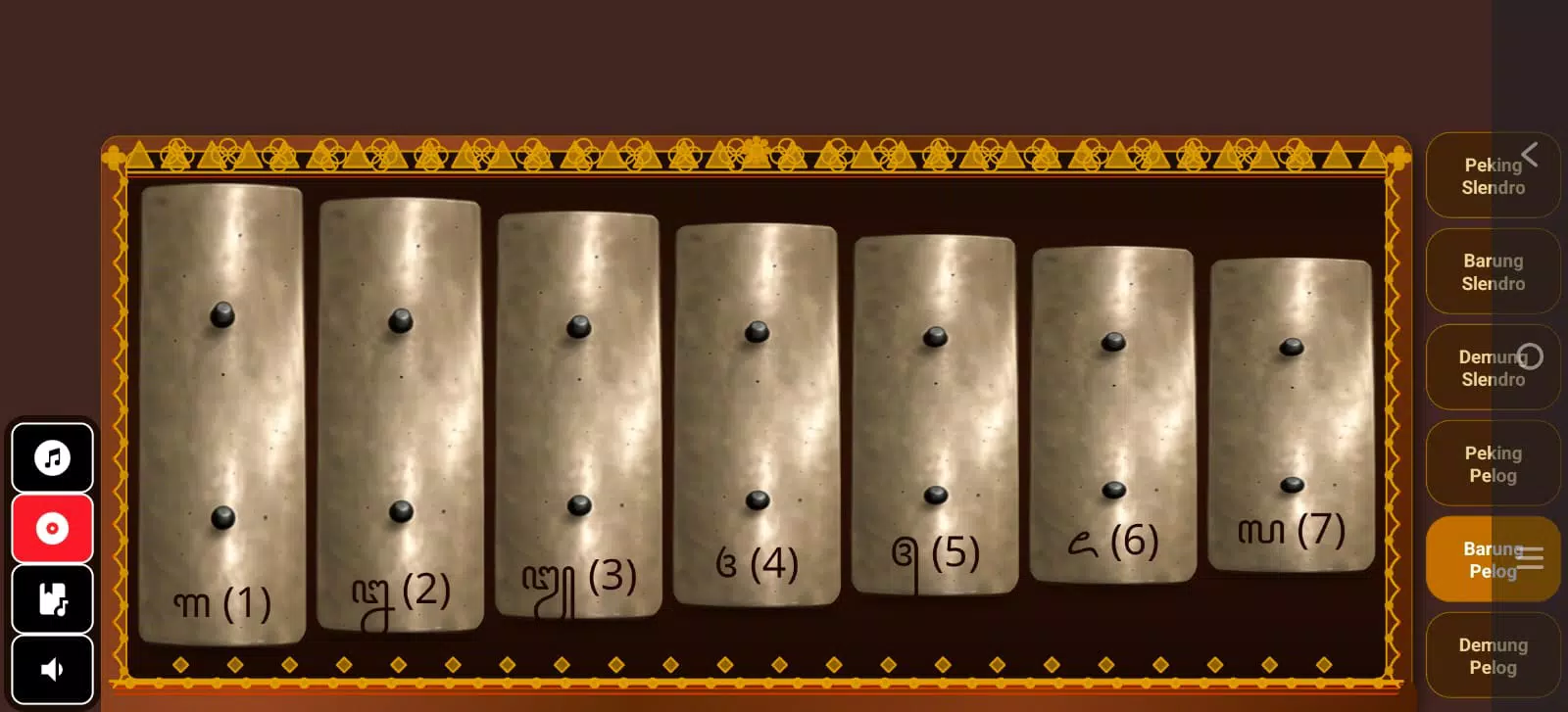
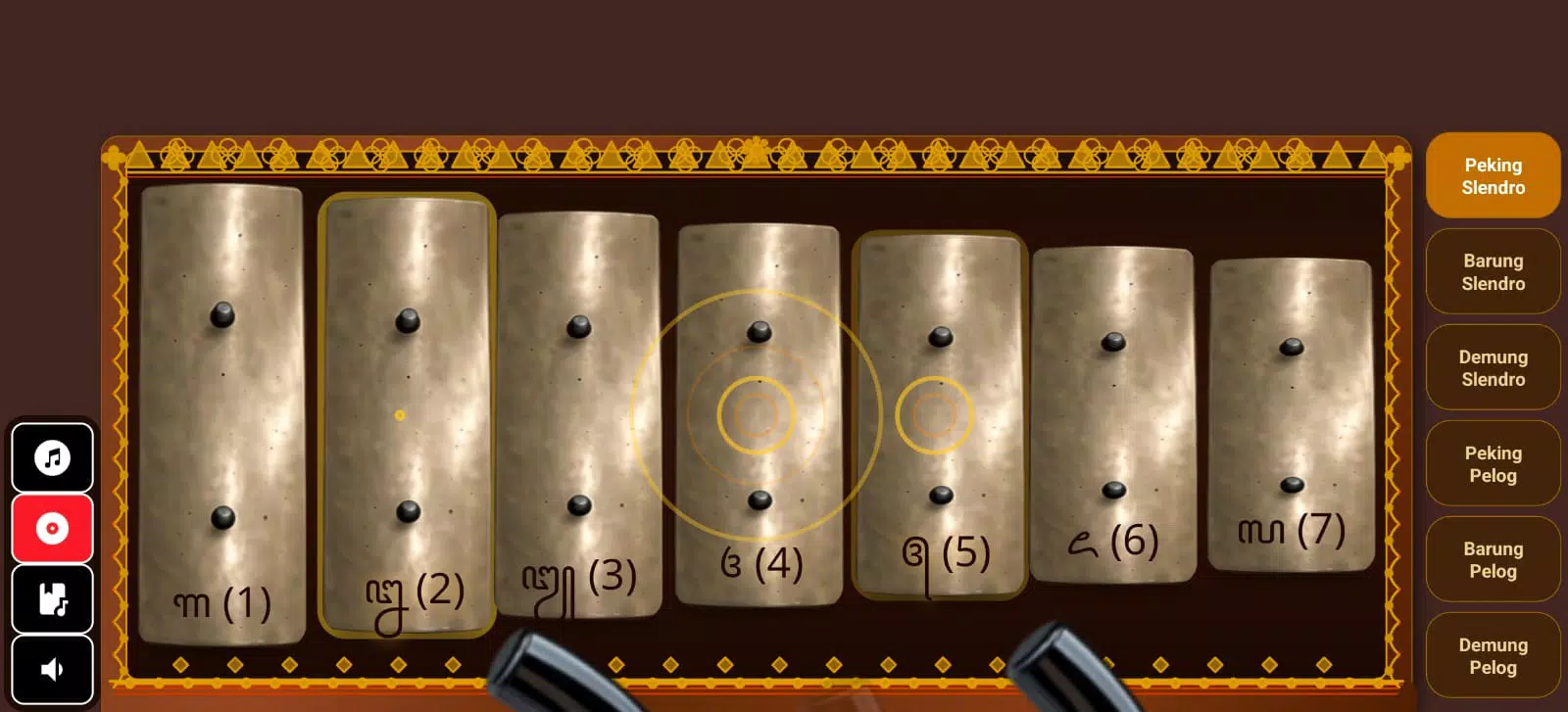
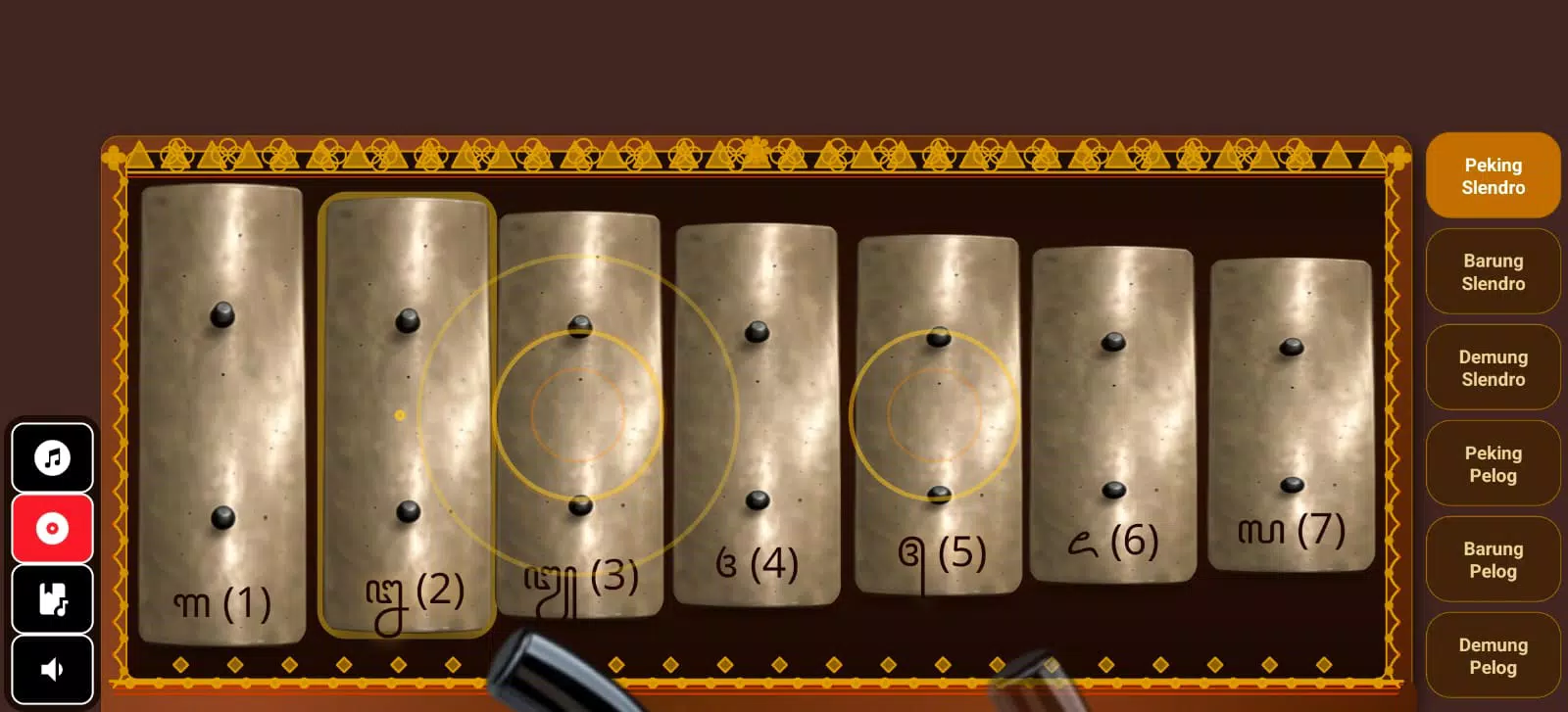
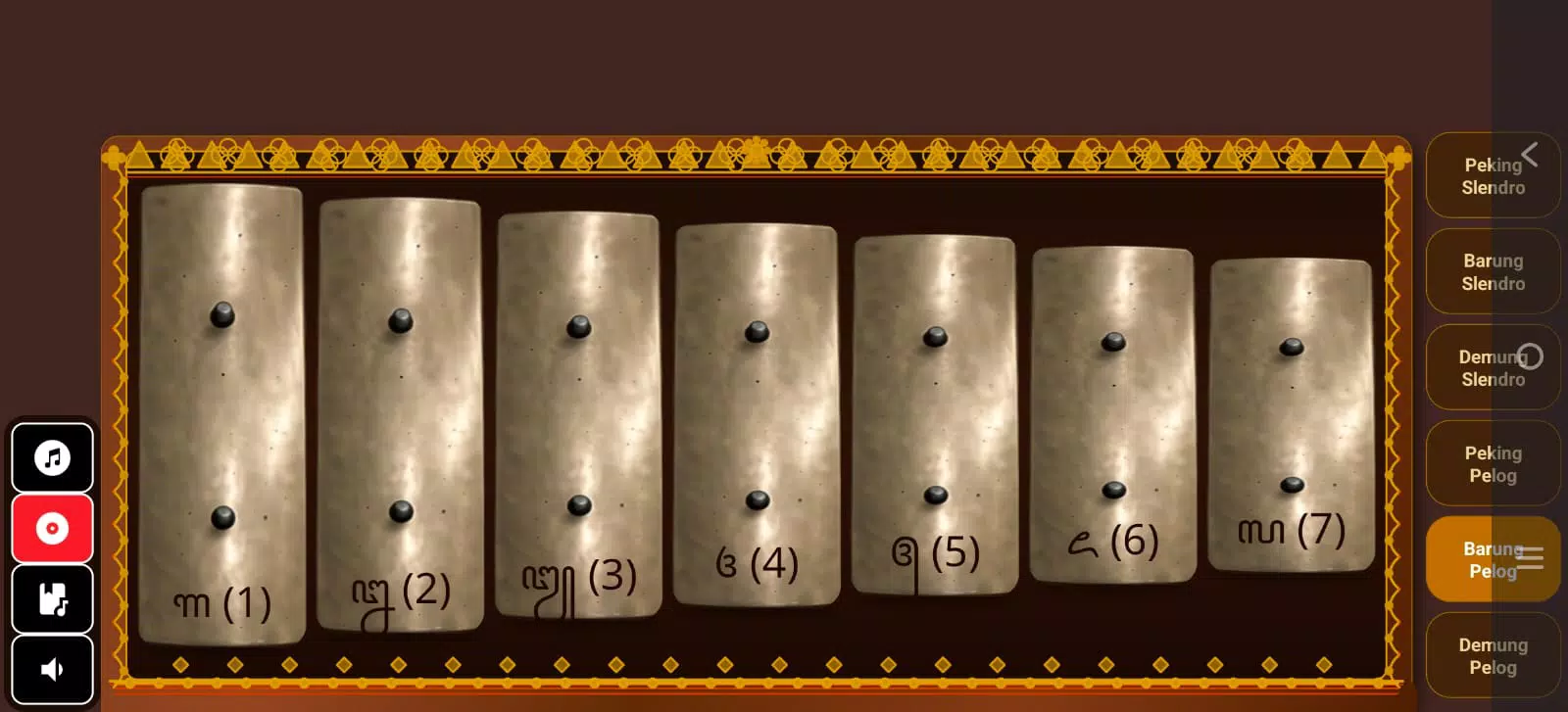
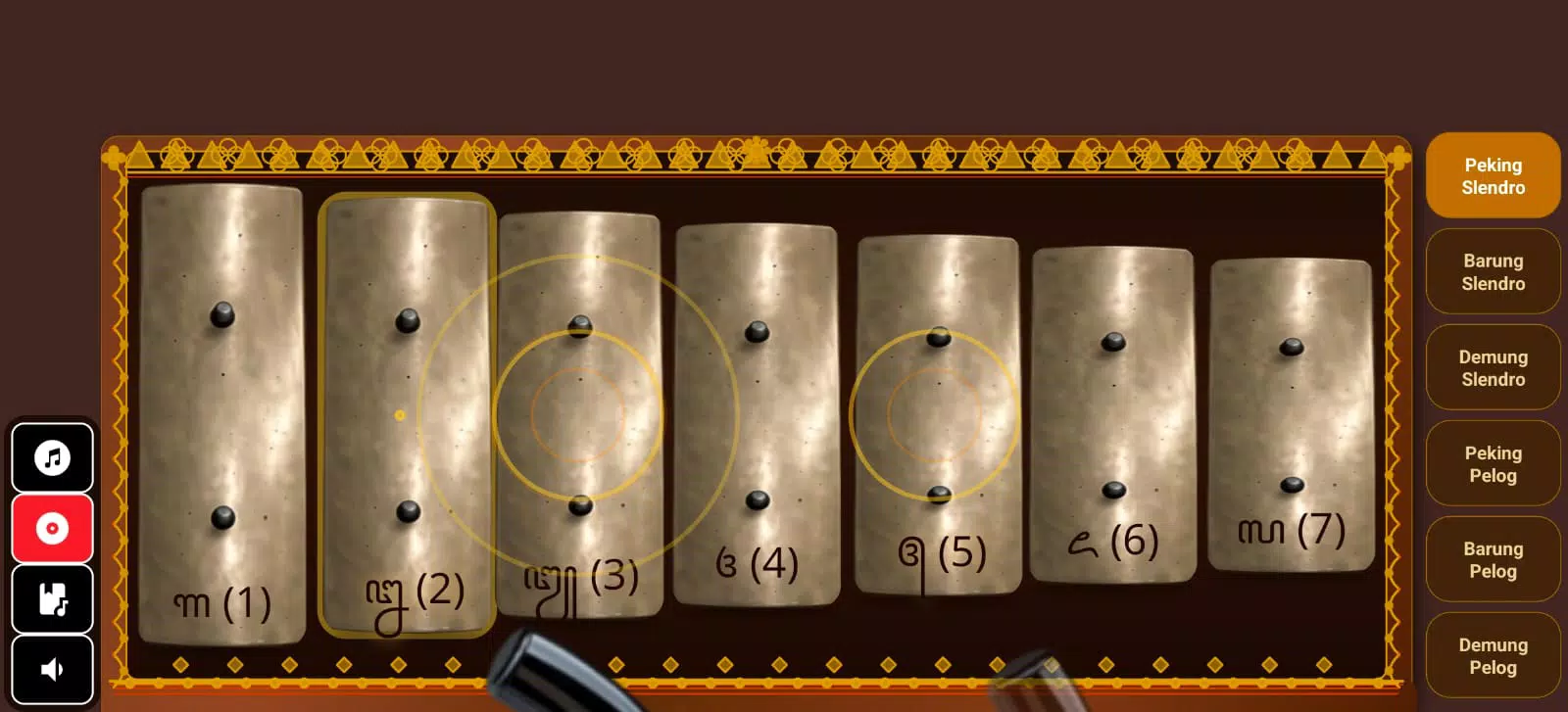
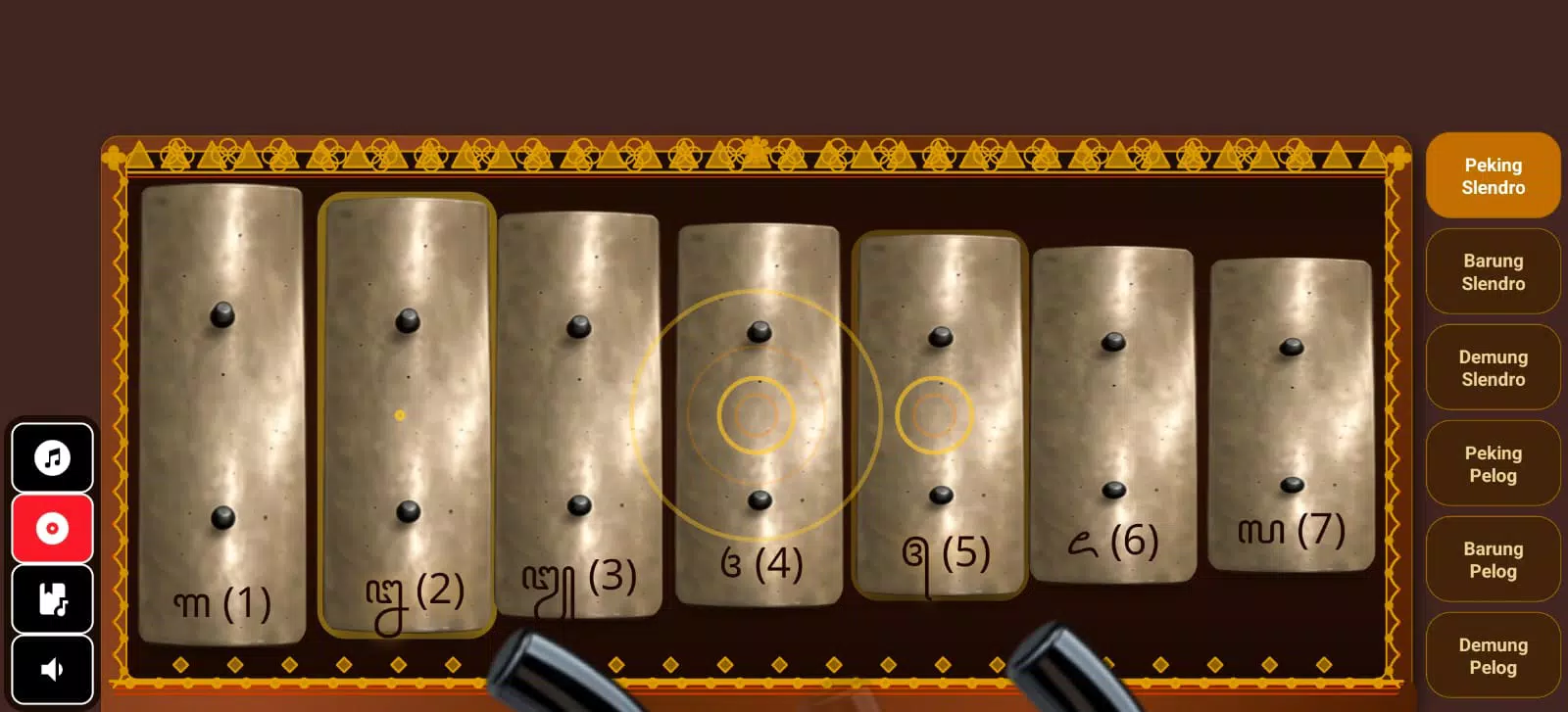
The interface is designed for intuitive touch control: tapping or swiping a key produces a strike, tap-and-hold sustains, and a short dedicated gesture simulates damping. Visual feedback highlights the struck bar and shows amplitude and decay so players can link gesture to sound. Practice clips allow real-time comparison: play along with a metronome or with simulated kendang cues at different tempos and dynamics, then listen back to a recording to evaluate timing and touch. Controls remain simple so users can transition from demonstration to hands-on drills without navigating deep menus.
Progression, practice structure, and challenge systems
Progression is lesson-based rather than gamified with arbitrary levels: learners begin with scale recognition and single-line matching, then advance to alternating parts, imbal sequences, and tempo adaptation exercises. Challenge sets are adaptive, increasing tempo or precision targets based on the player’s recent performance, and pattern-memory exercises reinforce phrasing under varied tempi. Completing modules unlocks additional practice sets and alternative tuning presets so the same phrase can be rehearsed in both pelog and slendro contexts. The emphasis is on steady skill development and reproducible practice routines rather than competitive scoring.
Visual style, notation, and customization
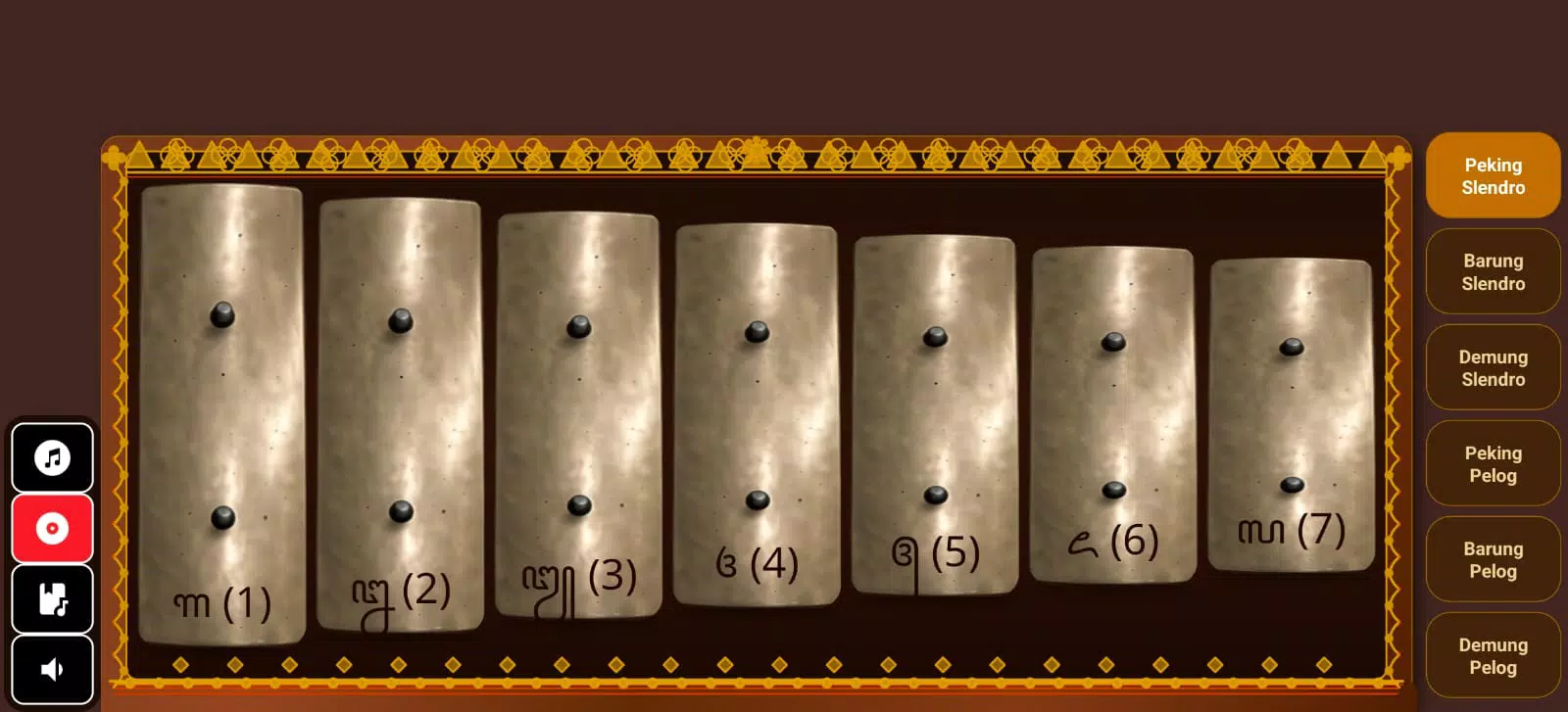
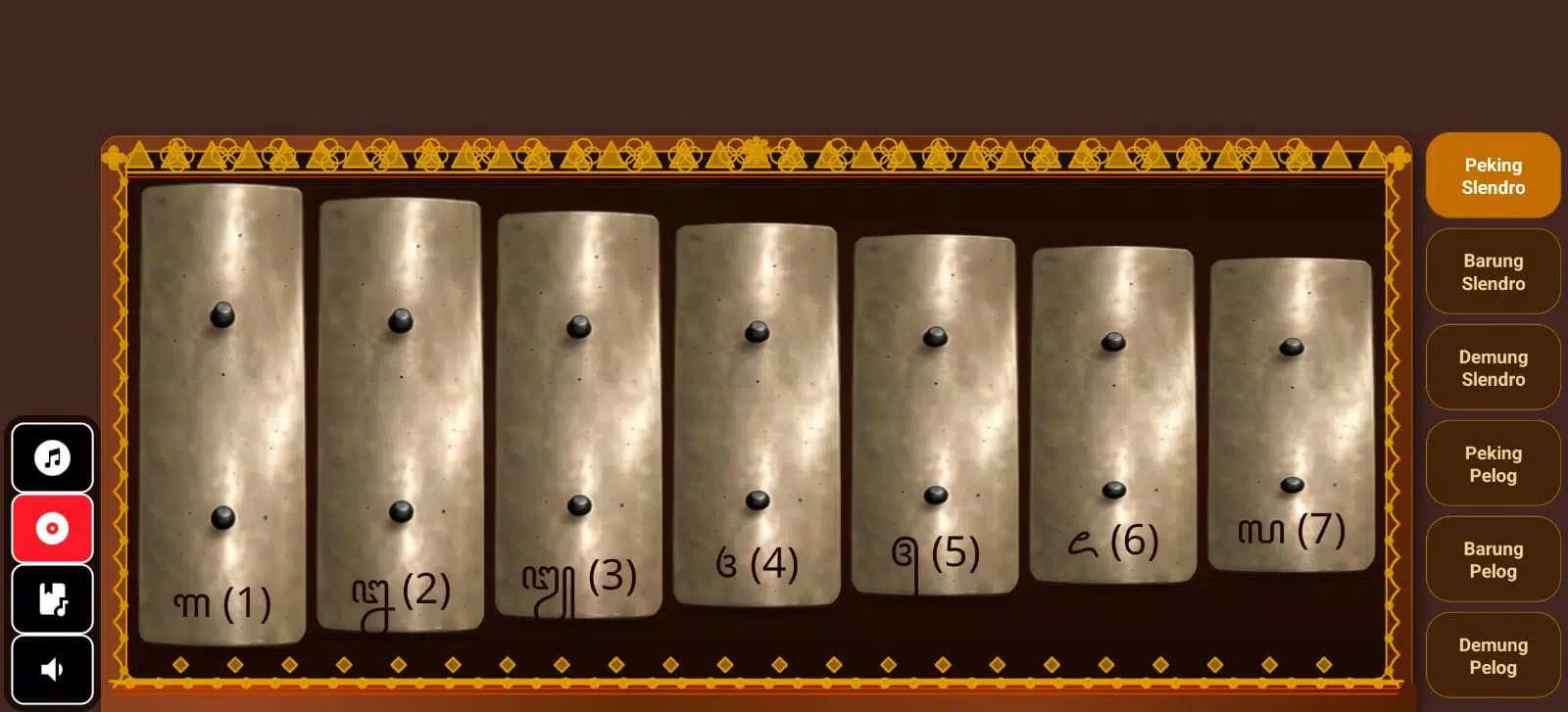
The visual design draws on restrained Javanese motifs and clear instrument diagrams to provide cultural context without cluttering the learning surface. Notation options include simplified syllables, numeric notation, and annotated Western staff so users coming from different backgrounds can read material comfortably. Customization covers mallet timbre (softer or harder), display themes with higher contrast, customizable metronome accents, and toggles for visual aids such as animated strokes or decay traces. These choices let learners tailor the app to their ear-training needs and visual preferences.
Accessibility, offline play, and user experience
Saron includes accessibility features such as adjustable playback speed, captioned explanations, enlarged control elements, and a simplified mode that steps users through exercises at a measured pace. Core lessons, practice clips, and visual diagrams are available offline after the initial download so learners can practice when a network is not available; audio samples are optimized to preserve clarity while keeping download size reasonable. The overall experience is designed to feel calm and instructive, minimizing technical barriers so users can focus on listening and physically practicing technique.
Replay value, ideal users, and limitations
The app’s replay value comes from layered practice content: short phrases can be repeated with different tunings, mallet types, and tempo settings, and adaptive challenges encourage incremental improvement. Saron is particularly useful as a compact companion for students, teachers, or ensemble listeners who want a practical instrument-focused introduction rather than a comprehensive ethnomusicological treatise. It intentionally limits scope to selected Surakarta practices and a single instrument focus; users seeking exhaustive regional surveys or advanced orchestration should use the app alongside recordings and in-person instruction for the fullest learning path.
- No virus
- No advertising
- User protection
Information
- File size: 15.90 M
- Language: English
- Latest Version: 1.23
- Requirements: Android
- Votes: 376
- Package ID: saron.virtual.instrument
- Developer: sayunara dev
Screenshots
















Explore More
In today's world, almost everyone owns a smartphone, making gaming incredibly convenient. Certain mobile games are crafted with numerous progressively challenging levels, which appeal to many players. Here, we've curated a selection of the latest mobile games featuring challenging levels, perfect for enjoying with friends.

Square Blocks

Street Racing Idle

Pixel Drop

The half-demon Malevola Clicker

Puzzle Beauty Mosaic

2020: Apocalypse Puzzle Block

BDSM Academy

The Red Veil