Introduction
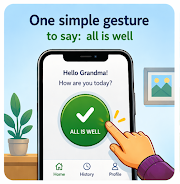
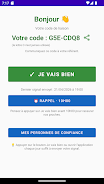
Tout va bien - Daily Check-in is a lightweight wellbeing app that gives families and caregivers a simple, respectful way to confirm a loved one is okay each day. With Tout va bien - Daily Check-in the experience is intentionally minimal: the app opens into an automatic confirmation system that sends a short “I’m okay” signal to preapproved contacts, while still offering a large, obvious manual check-in button for deliberate confirmations.
Key features
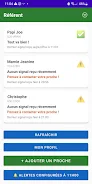
The core design centers on a one-tap or open-to-confirm interaction so the person being monitored does not need to navigate complex menus. Automatic daily check-ins activate when the app is launched; an optional manual confirmation button is prominent on the main screen for days when a deliberate tap feels better. Trusted contacts receive alerts if a scheduled check-in does not arrive within a configurable window, and caregivers can manage multiple profiles from a single account to support households with several people who need monitoring. New connections require a unique code and explicit approval, protecting consent and preventing unauthorized additions.
How it works
Interaction is deliberate and low-friction: opening the app or tapping the confirmation control sends a short wellbeing signal to the cloud and to selected trusted contacts. Administrators define who receives alerts, set expected check-in times, and choose reminder schedules. The app keeps a concise log of recent confirmations so families can review a history of check-ins without digging through detailed telemetry. Because the workflow is built around a predictable habit, caregivers can rely on a steady pattern of confirmations rather than continuous surveillance.
Controls and user interface
The interface favors clarity and accessibility. Primary controls are intentionally few: the daily automatic confirmation and a manual check-in button are presented as large, high-contrast elements with clear labels. Setup screens guide users through creating or joining monitoring circles using an easy code exchange and straightforward consent steps. Iconography is simple and consistent so older adults or people with limited smartphone experience can use the app confidently, and common actions are presented with single-tap targets to reduce accidental input.
Monitoring, progression and customization
Monitoring is profile-based: add the people you care for and assign trusted contacts who will be alerted if check-ins are missed. Progression in the app comes from expanding coverage across family members, refining alert windows to match daily routines, and adjusting notification priorities for different profiles. Customization options include setting morning or evening check-in times, enabling repeat reminders, and selecting escalation steps for missed confirmations so notifications follow a predictable, consent-driven sequence rather than an intrusive alert flood.
Visual style and experience
The visual design uses high-contrast palettes, large typography, and simple shapes to create a calm, readable interface. Color and contrast settings are adjustable to accommodate users with visual impairments, and the layout prioritizes large touch targets and uncluttered screens. The overall aesthetic is meant to feel familiar and non-medical so the app fits easily into daily life rather than feeling like a clinical monitor.
Accessibility and user support
Accessibility is built in: adjustable text size, color contrast controls, and clear onboarding language help people with visual or cognitive needs personalize the experience. Guided setup walks caregivers and monitored members through consent and verification steps at a gentle pace, and in-app hints explain how alerts work and what to expect if a check-in is missed. Support information and simple troubleshooting tips are available within the app to reduce setup friction.
Offline behavior and reliability
The app is designed to tolerate common connectivity interruptions. If a device temporarily loses network access it retains the most recent activity locally and attempts to deliver signals when connectivity returns, reducing false alarms from short outages. Missed daily confirmations will still surface to trusted contacts once the device reconnects, and the system’s retry logic is intended to balance reliability with minimizing unnecessary escalations.
Security, privacy and limitations
Privacy is a central principle: the app does not perform continuous GPS tracking or passive background monitoring. Only a brief confirmation message is sent when the app is opened or a manual button is tapped. New relationships require a unique code and approval to prevent unauthorized access, and communications are transmitted through secure channels so personal data is shared only with approved contacts. The app is not a replacement for emergency services and does not provide live location tracking or direct emergency response; it is a routine wellbeing confirmation tool, and missed openings can result in alerts even when no emergency exists.
Subscription and who it’s for
The service offers a free one-month trial followed by subscription tiers that scale with family size and the number of monitored profiles. Tout va bien - Daily Check-in is aimed at families with elderly parents, distant relatives, students living away from home, or anyone who benefits from a privacy-focused, low-friction daily check-in routine. The app helps preserve independence while reducing worry through a repeatable habit rather than continuous oversight.
Why it stays useful
By combining a predictable interaction model, clear visual design, and configurable alerts, Tout va bien - Daily Check-in provides lasting value: it encourages daily routines, reduces caregiver uncertainty, and supports multiple profiles without overwhelming detail. Regular use creates a reliable pattern of confirmations that is easy to maintain, offers meaningful customization for different household rhythms, and remains respectful of privacy while keeping families connected.
- No virus
- No advertising
- User protection
Information
- File size: 23.12 M
- Language: English
- Latest Version: 1.2.2
- Requirements: Android
- Votes: 390
- Package ID: com.gdc.toutvabien
- Developer: Green Droid
Screenshots



-
1

Windy.app - Enhanced forecast
Download -
2

Wink – Video Enhancing Tool Mod
Download -
3

AI Chat Smith Open Chatbot 4 Mod
Download -
4

Vidmix - AI Art & MV Maker Mod
Download -
5

GoDaddy Studio: Graphic Design Mod
Download -
6

Video Editor & Maker- My Movie Mod
Download -
7

StoryArt - Insta story maker Mod
Download -
8

Storytel: Audiobooks & Ebooks Mod
Download








Explore More
We provide a wide range of commonly used software for free and secure download. All software has undergone thorough security and virus scans to ensure a safe download experience.

Chinese cooking recipes game

Drift

Tierbuch Hühner
CookingTimerPro

FinSwift

LibLib

Soonly: Ideas & Notes

Antim Sanskar Guide