Introduction
The Last Of Usuals: Zombie RPG places you in a compact, tense single-player survival shooter where every wave matters. The Last Of Usuals: Zombie RPG blends wave-based combat, incremental upgrades, and hidden map details to create short, engaging sessions that work well on mobile devices. As the last survivor of your group, you explore ruined arenas, manage weapons and character upgrades, and face enemy types that demand shifting tactics.
Gameplay Overview
Combat is structured around discrete waves: each round raises the stakes by introducing tougher undead and new tactical scenarios. Encounters reward careful positioning, target prioritization and efficient use of limited ammo. Levels are designed for repeated runs, with small surprises and easter eggs that encourage exploration between waves. The game emphasizes quick decision-making rather than complex menus, making it suitable for both short play bursts and longer survival attempts.
Controls and Accessibility
The Last Of Usuals: Zombie RPG uses a touch-friendly control scheme with on-screen movement and fire controls optimized for phones and tablets. Controls are intentionally straightforward so new players can focus on tactics rather than steep learning curves, while responsive aiming and movement keep experienced players engaged. Accessibility options include adjustable sensitivity and clear visual feedback for hits and ability activations, helping players tailor the experience to their preferences.
Progression and Customization
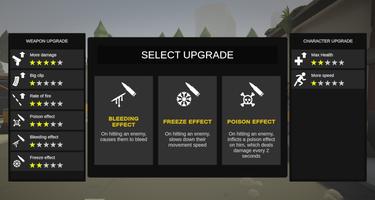
Progression is driven by upgrades to both weapons and your character. As waves progress you earn resources to improve firepower, reload speed, and durability, which allow you to adapt your loadout to tougher enemy waves. Upgrade paths are branching enough to support different playstyles—some players may emphasize heavy weapons and survival, while others focus on mobility and rate of fire. Loadout choices create meaningful variety without requiring persistent online connectivity.
Visual Style and Presentation
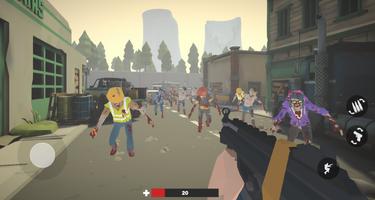
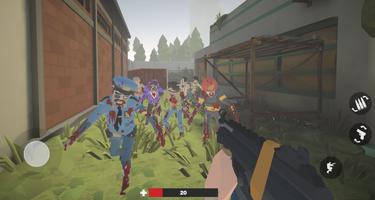
The game pairs a classic post-apocalyptic aesthetic with polished mobile visuals. Environments show weathering and decay without sacrificing clarity, while enemy designs are distinct so you can quickly recognize threats in the heat of combat. Animations for weapons and characters are kept intentionally readable, helping you assess encounters at a glance. Overall presentation balances atmosphere with functional clarity that supports gameplay under pressure.
Level Structure and Exploration
Maps are compact arenas built around wave progression rather than sprawling open-world design. This focused structure allows each stage to be dense with action and small secrets: hidden easter eggs and minor environmental variations give exploration value between waves. Since maps are designed for repeated play, familiarity becomes an asset as you learn choke points, cover options, and enemy spawn patterns.
Challenge Systems and Replay Value
Replay value comes from wave scaling, upgrade choices, and enemy variety. Later waves introduce combinations of enemy types that force you to rethink tactics, and the upgrade system encourages experimentation with different weapon and stat combinations. Because sessions can be relatively short, the game supports incremental progress and repeated attempts, rewarding players who refine their strategies over multiple runs.
Offline Play and User Experience
One practical advantage of The Last Of Usuals: Zombie RPG is its offline capability: you can play without a constant internet connection, which is useful for on-the-go use or areas with limited coverage. The interface focuses on quick restarts and a clear progression display so players can pick up where they left off. Load times and resource usage are tuned for mobile hardware to keep sessions smooth on a wide range of devices.
Advantages and Limitations
Advantages include a self-contained single-player experience with meaningful upgrade progression, varied enemy design, and polished mobile graphics. The straightforward controls and offline playability make it accessible to casual users while still offering depth for players who enjoy optimizing loadouts. Limitations to note: the game centers on wave-based survival rather than a deep, narrative-driven campaign, and it does not include multiplayer modes. Players seeking a story-first experience or cooperative play may find the structure focused more on combat loops and replayability than on extended narrative arcs.
- No virus
- No advertising
- User protection
Information
- File size: 124.50 M
- Language: English
- Latest Version: 0.3
- Requirements: Android
- Votes: 121
- Package ID: com.Anunkia.LastOfSurvivors
- Developer: Anunkia Studio - Zombie games
Screenshots

-
1

Neonverse: Invaders Shoot'EmUp Mod
Download -
2

Slingshot Bulldozer Mod
Download -
3

Galaxy Shooter - Space Attack Mod
Download -
4

You Sunk - Submarine Attack Mod
Download -
5

War Machines:Tanks Battle Game Mod
Download -
6

Country Balls: Armageddon Mod
Download -
7

Flying Flogger Mod
Download -
8

STRIKERS 1945-2 Mod
Download






Explore More
Small games that help pass the time have evolved into a plethora of cool and refreshing experiences that allow us to briefly immerse ourselves without getting addicted, providing us with plenty of enjoyment even if we can only play them for a short while sometimes.
Health Points

According To Sofia

NeToRi Phone: Bull Simulator
Idle Guild

The Neuronauts

Dot Link

Crash Fever: The Ultimate RPG

RhythmStar