Introduction
Tokyo After School Pixel Blade delivers fast-paced pixel-art combat with a focus on strategic preparation and bite-sized encounters; in this title you assemble a roster of unique fighters, set formations and priorities, then watch auto-battles play out according to your plan. The app balances quick-session play with steady progression: casual players can enjoy short runs and gacha-style rewards, while collectors can pursue limited recruits and fragments to expand their options. Tokyo After School Pixel Blade is built around accessible mechanics that reward planning over twitch reflexes, making it simple to pick up yet deep enough to keep returning.
Gameplay and Core Mechanics
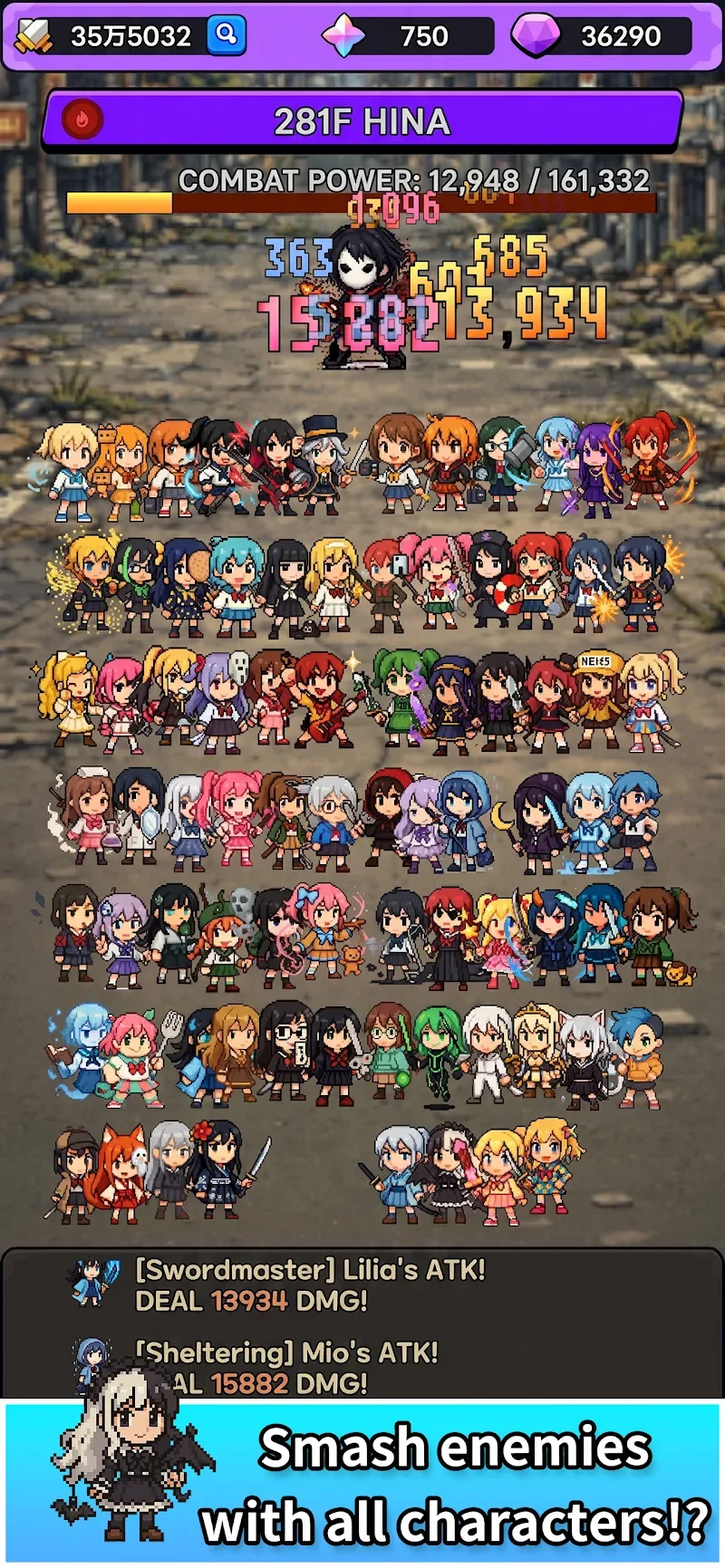
The core loop centers on assembling a team and configuring roles before sending them into automated combat. Battles resolve automatically, but outcome depends heavily on team composition, skill levels, and the synergy between characters. Typical encounters vary from straightforward mob stages to focused boss fights that require different formations or counters. Idle-style progression complements active play: defeated enemies and completed missions translate into upgrades and resources that persist between sessions, so your roster grows even when you’re taking breaks from the game.
Controls and User Experience
Controls are intentionally streamlined to favor quick decision-making outside of combat: touch-driven menus let you manage characters, view fragments, claim free spins, and assign upgrades without long tutorials. The user interface emphasizes clarity so you can review formation slots, skill descriptions and recruit availability at a glance. With short match length and an automated battle system, the experience is optimized for mobile: you can play in short bursts, check progress, and return to tune strategies as new recruits or fragments arrive.
Progression Systems
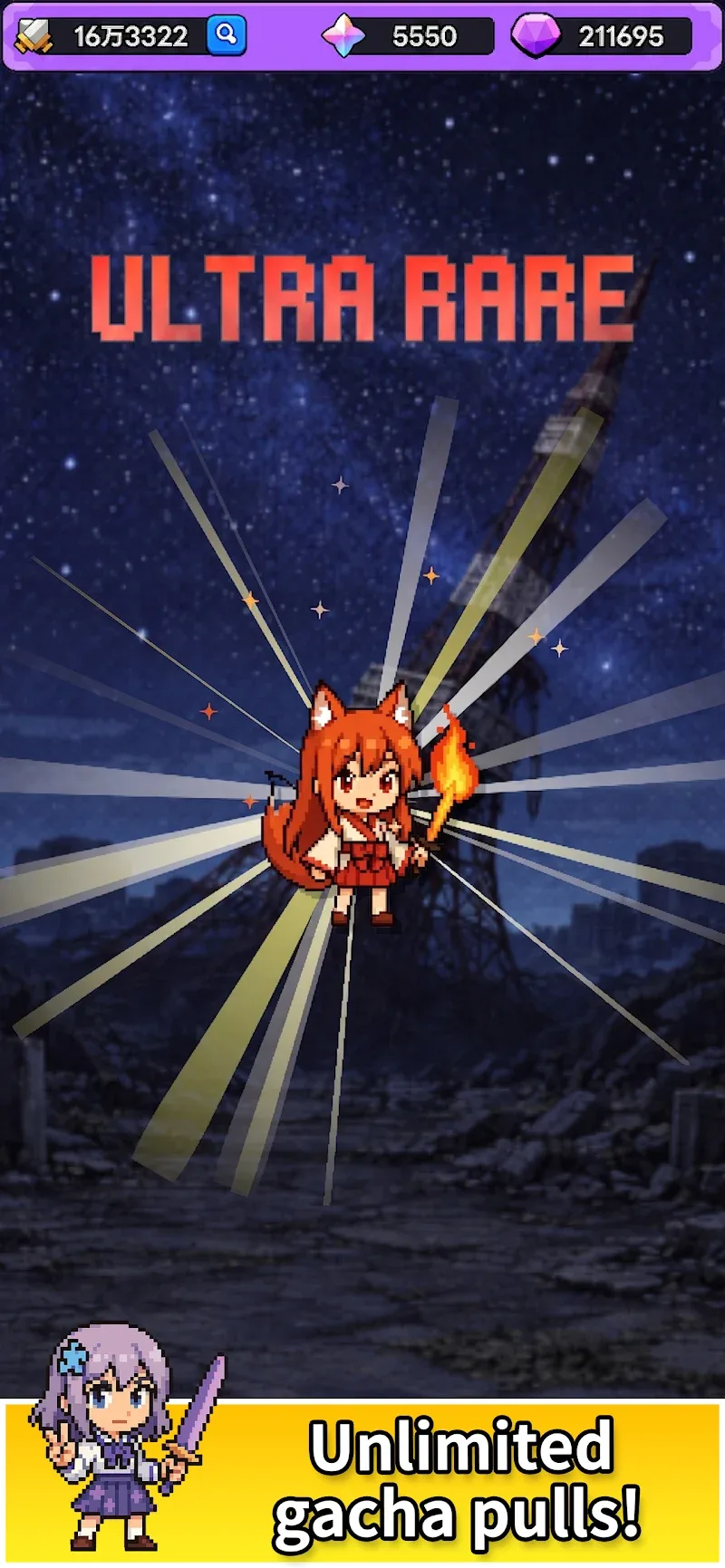
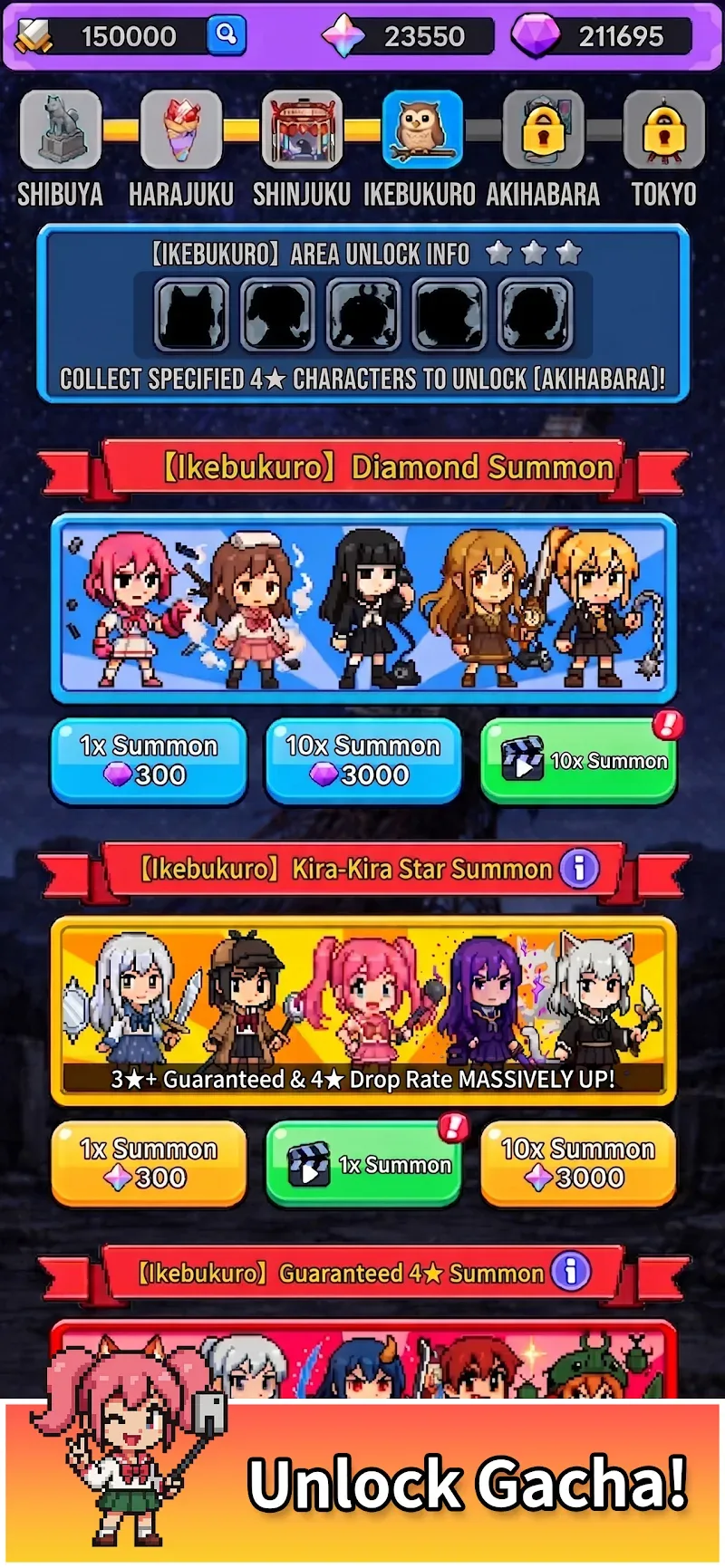
Progression relies on a combination of level-ups, character fragments, and gacha-style rewards. Characters grow through upgrades and fragment collection; fragments accumulate from drops, events and spin rewards and can be exchanged to unlock or promote units. The spin wheel and regular free gacha opportunities create recurring goals and surprise rewards, while a steady stream of resources supports incremental power increases rather than sudden leaps, offering a sense of continual advancement without demanding prolonged grind sessions.
Visual Style and Level Structure
Presented in detailed pixel art, the game uses retro-inspired visuals to create distinct and memorable character portraits and battlefield animations. Levels are arranged into stages that increase in difficulty and introduce new enemy types and mechanics as you progress. Designers often layer environmental variety and simple mechanics into later stages to test different team compositions, so moving through chapters feels like a steady escalation rather than repetition. Limited-time or themed recruits provide visual and tactical variation when they appear.
Customization and Builds
Customization focuses on team composition and character development: each recruit typically fills a role or niche, and thoughtful formation choices amplify their strengths. Upgrading skills or investing fragments into particular characters changes how formations perform, allowing for specialized builds such as burst damage frontlines or defensive teams that outlast opponents. Because recruitment comes through fragment collection and spins, part of the metagame is deciding where to invest limited resources for the strongest synergies.
Replay Value and Challenge
Replay value stems from collectible depth, rotating rewards, and escalating stage difficulty. Short encounters make it easy to retry levels with adjusted formations, and limited-edition recruits create recurring objectives for returning players. Challenge systems emphasize strategic adaptation rather than pure speed: tougher encounters reward refined team synergy, promotion decisions and the intelligent use of fragments to shore up weaknesses.
Accessibility and Offline Considerations
The design accommodates players who cannot remain online at all times by leaning on idle progression and simple management systems; meaningful progress is possible without long active sessions. Menus and combat summaries are crafted to be readable and approachable for new players while letting veteran collectors drill into roster optimization. The overall pacing respects casual play patterns, letting you step away without losing the sense of ongoing advancement.
Key Features
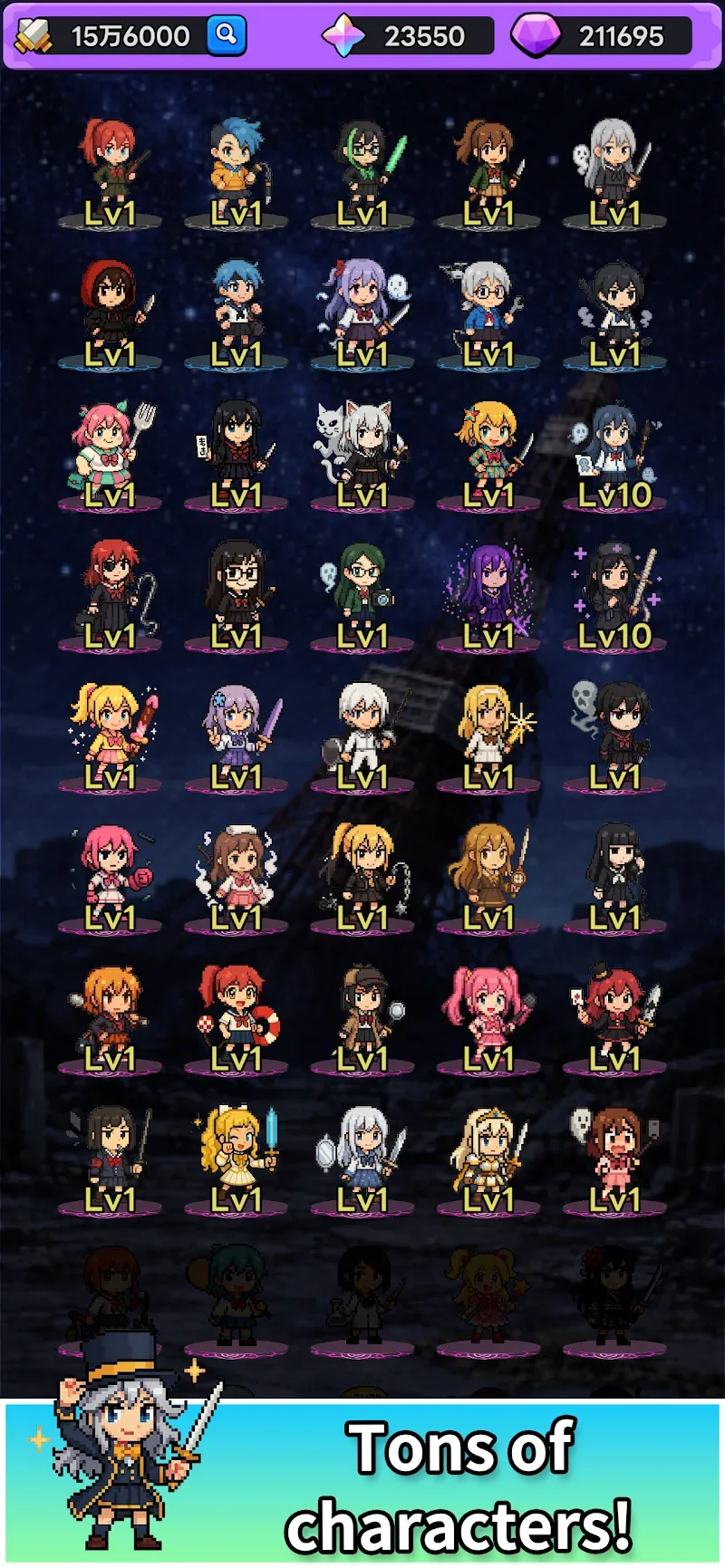
Tokyo After School Pixel Blade pairs automated pixel-art battles with strategic team assembly, an idle-influenced growth model and gacha-style recruitment. The game offers frequent opportunities to earn fragments and spins, a large cast of characters including limited-time recruits, and short, replayable stages that escalate in complexity. Visual clarity and concise interfaces make roster management and progression straightforward, while the collectible element provides long-term goals.
Advantages
Key strengths include approachability for new players, short session lengths that fit mobile lifestyles, and an idle progression system that rewards intermittent play. Tokyo After School Pixel Blade also offers a satisfying collector loop driven by fragments and gacha rewards, plus tactical depth in how you assemble and upgrade your squad.
Disadvantages
Potential downsides mirror the genre: reliance on gacha randomness can make certain progression paths feel luck-dependent, and the auto-battle format reduces direct control during fights, which may not satisfy players seeking fully hands-on action. Expect a focus on roster building and strategic prep rather than real-time combat input.
- No virus
- No advertising
- User protection
Information
- File size: 114.00 M
- Language: English
- Latest Version: 1.0.5
- Requirements: Android
- Votes: 97
- Package ID: tokyo-after-school-pixel-blade
- Developer: Just Idea
Screenshots








Explore More
Small games that help pass the time have evolved into a plethora of cool and refreshing experiences that allow us to briefly immerse ourselves without getting addicted, providing us with plenty of enjoyment even if we can only play them for a short while sometimes.

Junior H Música Piano Juegos

Cat Piano Tap: Music Game

Real Drift Car Racing Games

Blanc Clicker: Bunnies and Reindeers

趣猜歌-歌曲问答 听歌猜歌名 歌手

Bubble Pop: Wild Rescue
Breaking Cube

Sexy Photo Grid Puzzle Game