Introduction
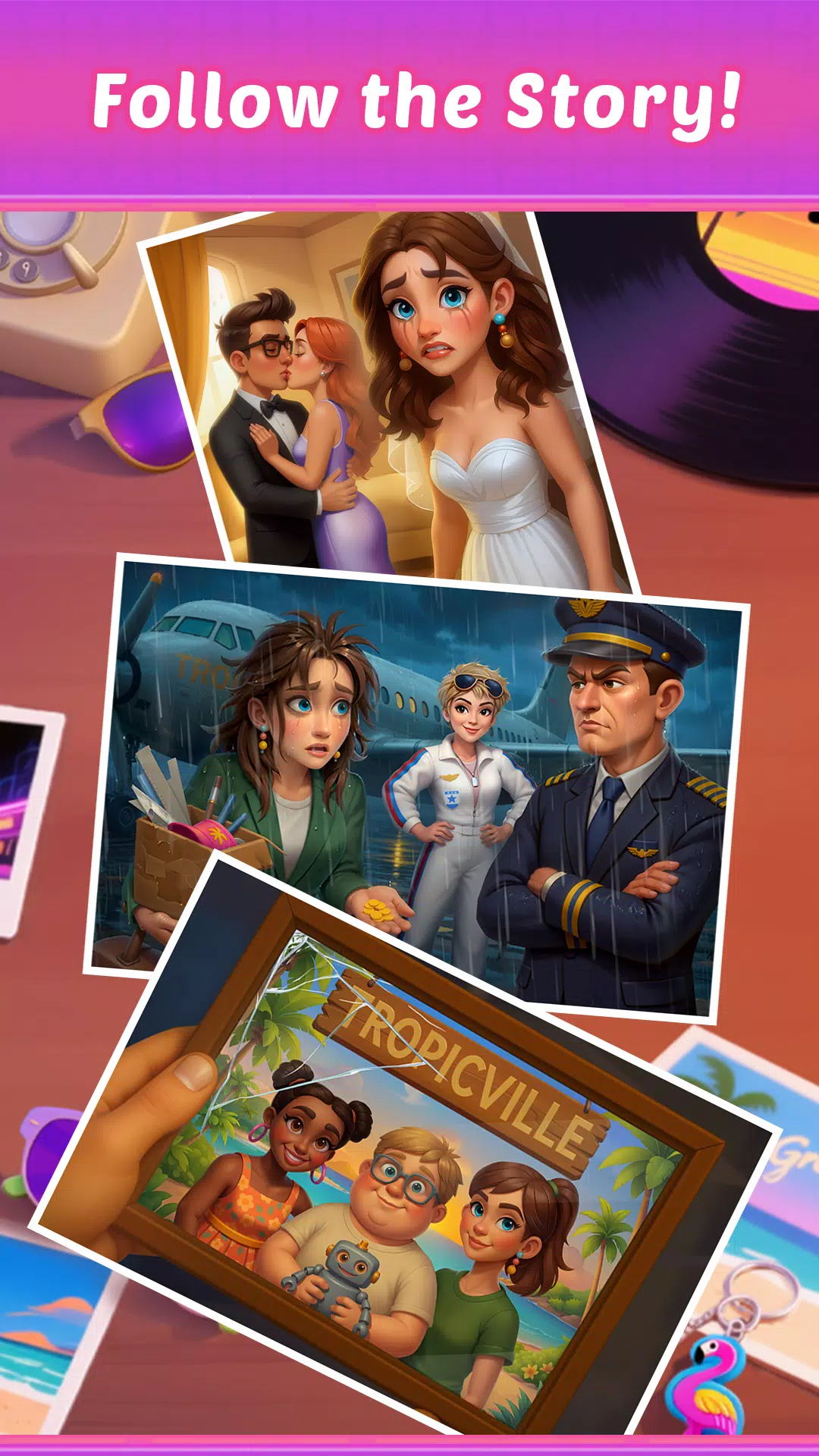
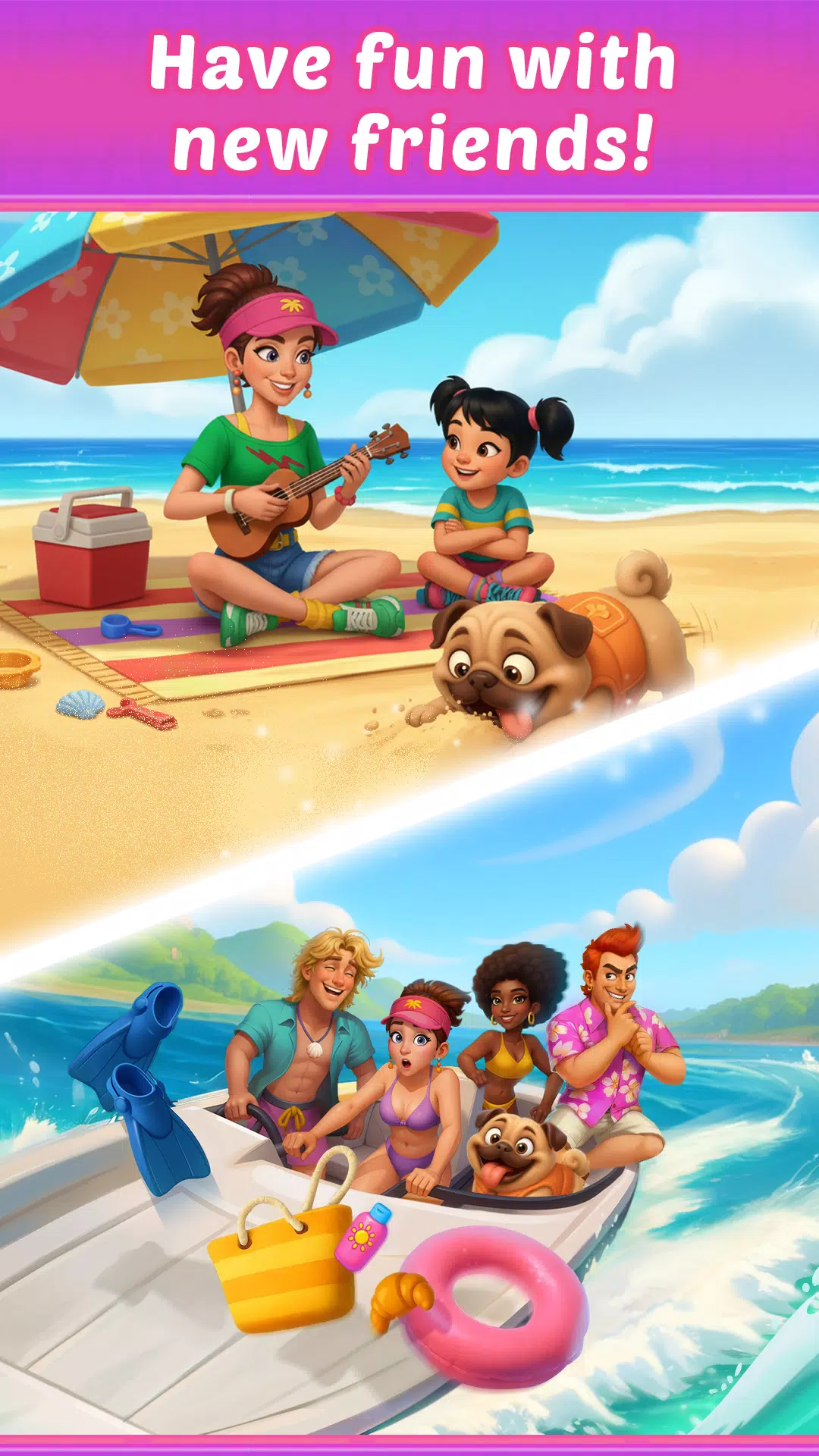
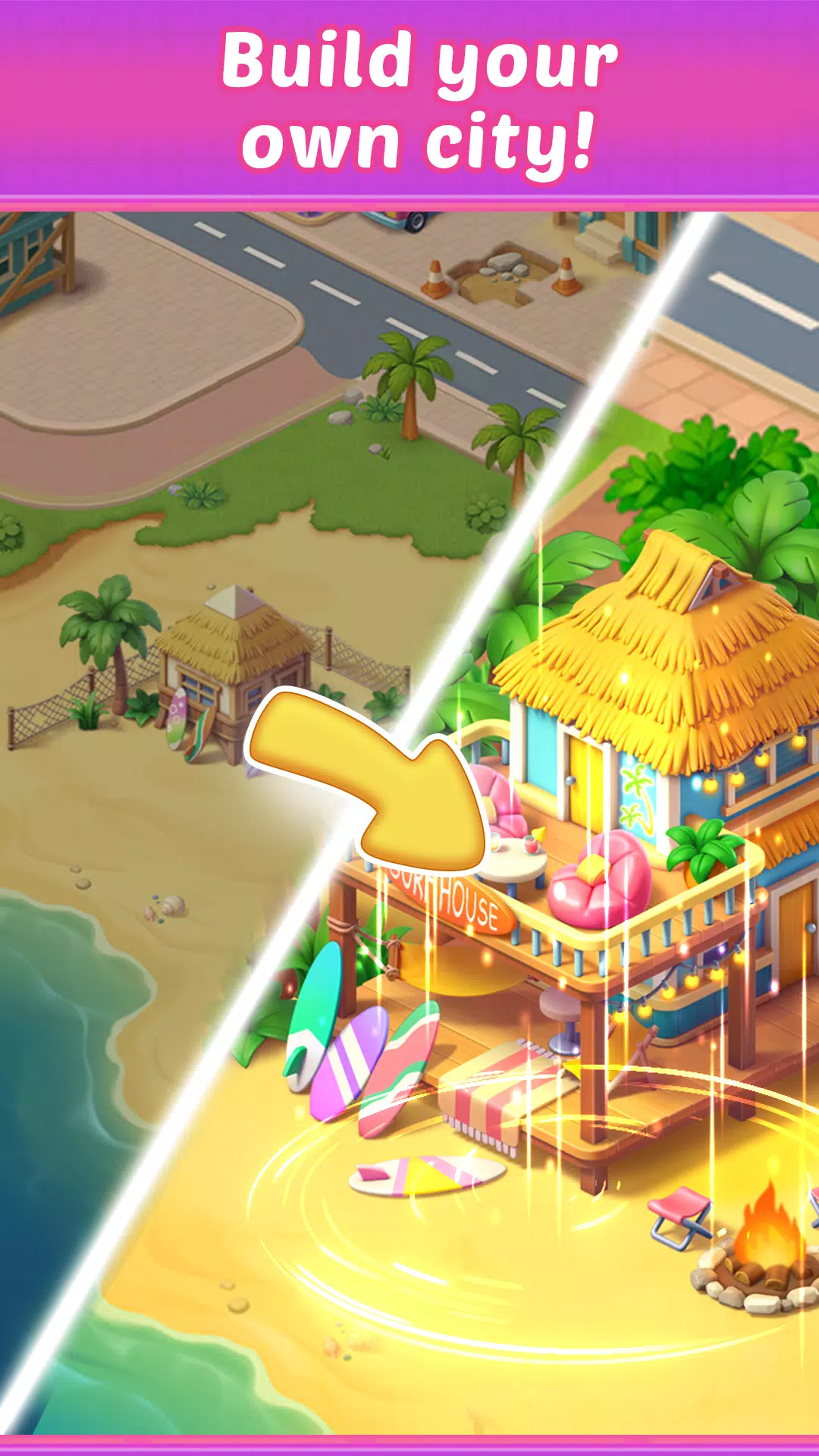
TropicVille blends relaxed merge-puzzle gameplay with renovation and design, inviting players to restore a forgotten beach town into a retro-inspired tropical paradise. The game centers on combining objects on a grid to reveal furniture, tools and decorative items that you then place in houses, cafes and beachside diners to progress a character-driven story featuring Roxy, surfer Leo and chef Marco. As a rookie architect you take on client requests, manage renovation budgets and gradually expand the town from scattered shacks into a lively coastal getaway while enjoying steady puzzle-based progression and decorative customization.
Key Features
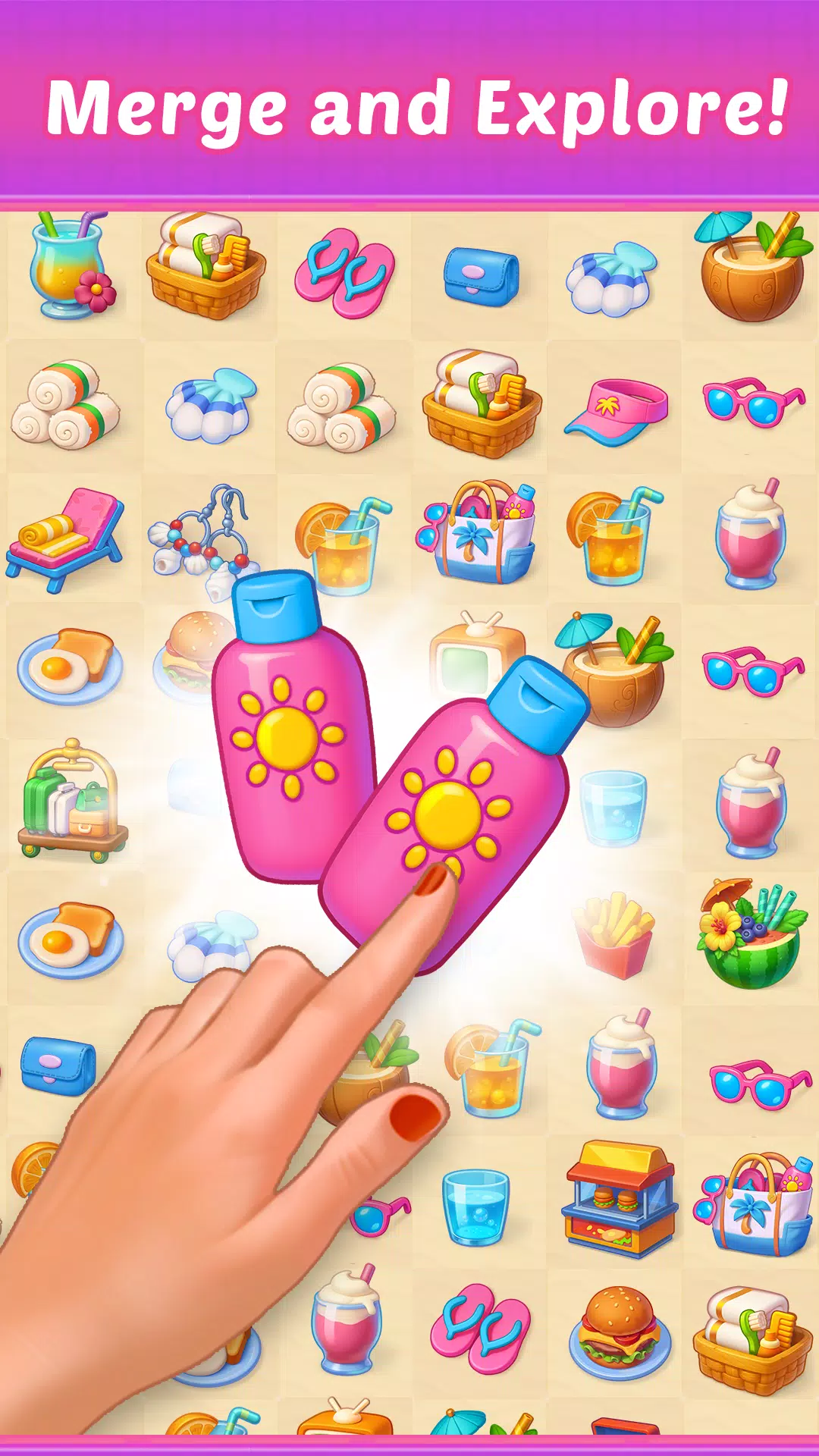
The core of TropicVille is its merge mechanic coupled with a renovation loop that feels both creative and rewarding. Merge sequences unlock practical items you need to complete jobs and, at the same time, reveal aesthetic pieces you can use to personalize rooms and exterior spaces. The narrative thread ties renovation projects to character arcs, so design choices and unlocked elements help you follow Roxy’s journey and the shifting relationships with inhabitants like Leo and Marco. Events, daily bonuses and rotating objectives add new items and time-limited challenges so there is always something fresh to pursue without forcing real-money purchases.
Gameplay Mechanics and Controls
Gameplay is driven by a straightforward tap-and-drag control scheme designed for touch screens: tap to select tiles, drag to combine matching items and tap again to place unlocked objects in renovation scenes. Puzzles start simple and introduce new elements gradually, encouraging strategic planning as you decide which merges to prioritize for tools, currency or decorative rewards. There are occasional puzzle modifiers that introduce obstacles or bonus tiles; these create short bursts of challenge while maintaining the relaxed pace that characterizes the overall experience.
Progression and Rewards
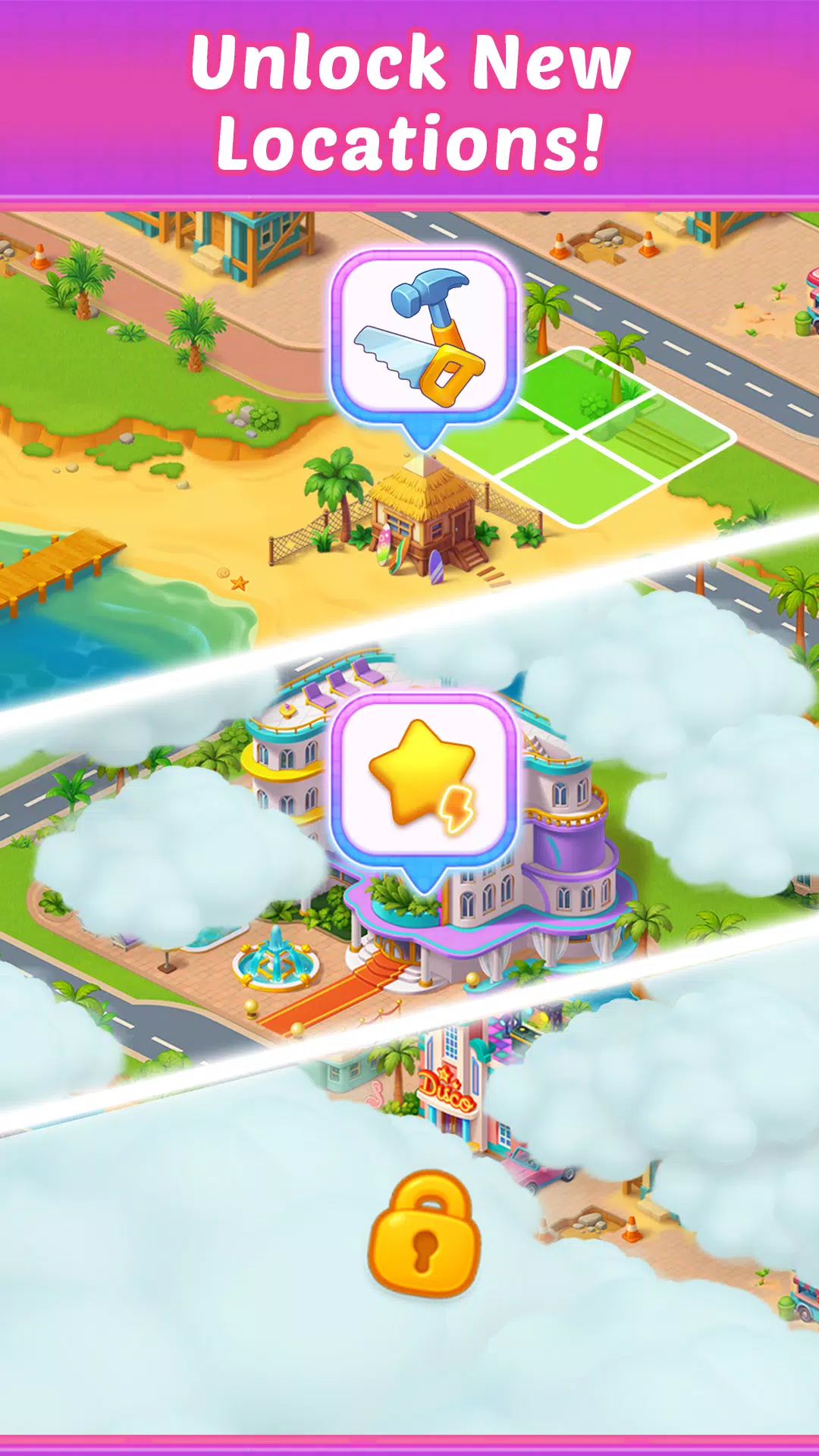
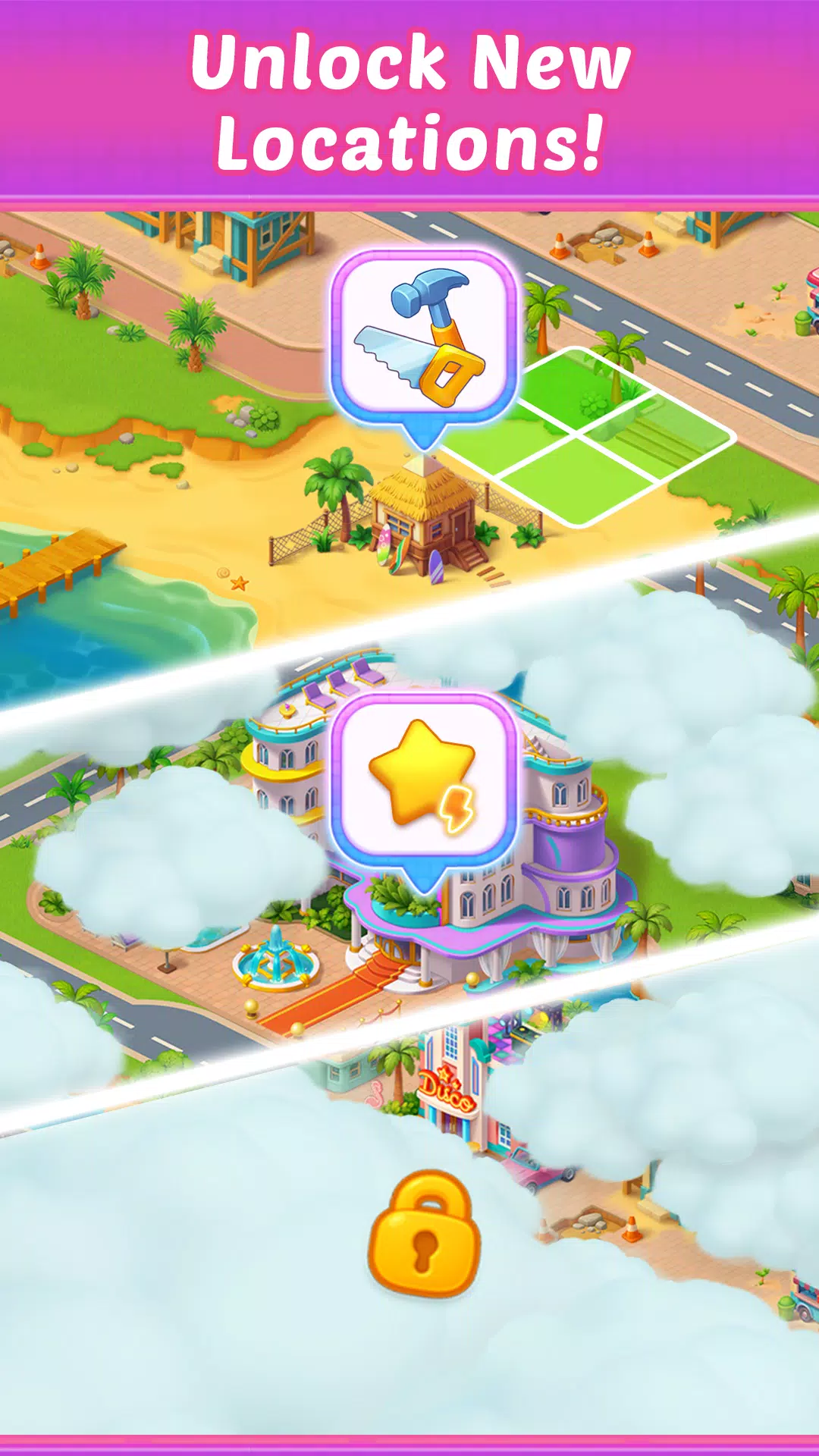
Progression in TropicVille balances puzzle mastery with renovation goals. Completing merge levels yields materials and furniture pieces needed to finish jobs; completing renovation projects advances the story and unlocks new districts to renovate. The game uses a layered reward system that includes immediate puzzle drops, renovation completion bonuses and longer-term event rewards. Regular updates add themed content and limited-time collections so players can gradually assemble unique décor sets, while daily check-ins and milestone achievements support steady advancement without pressure.
Customization and Design
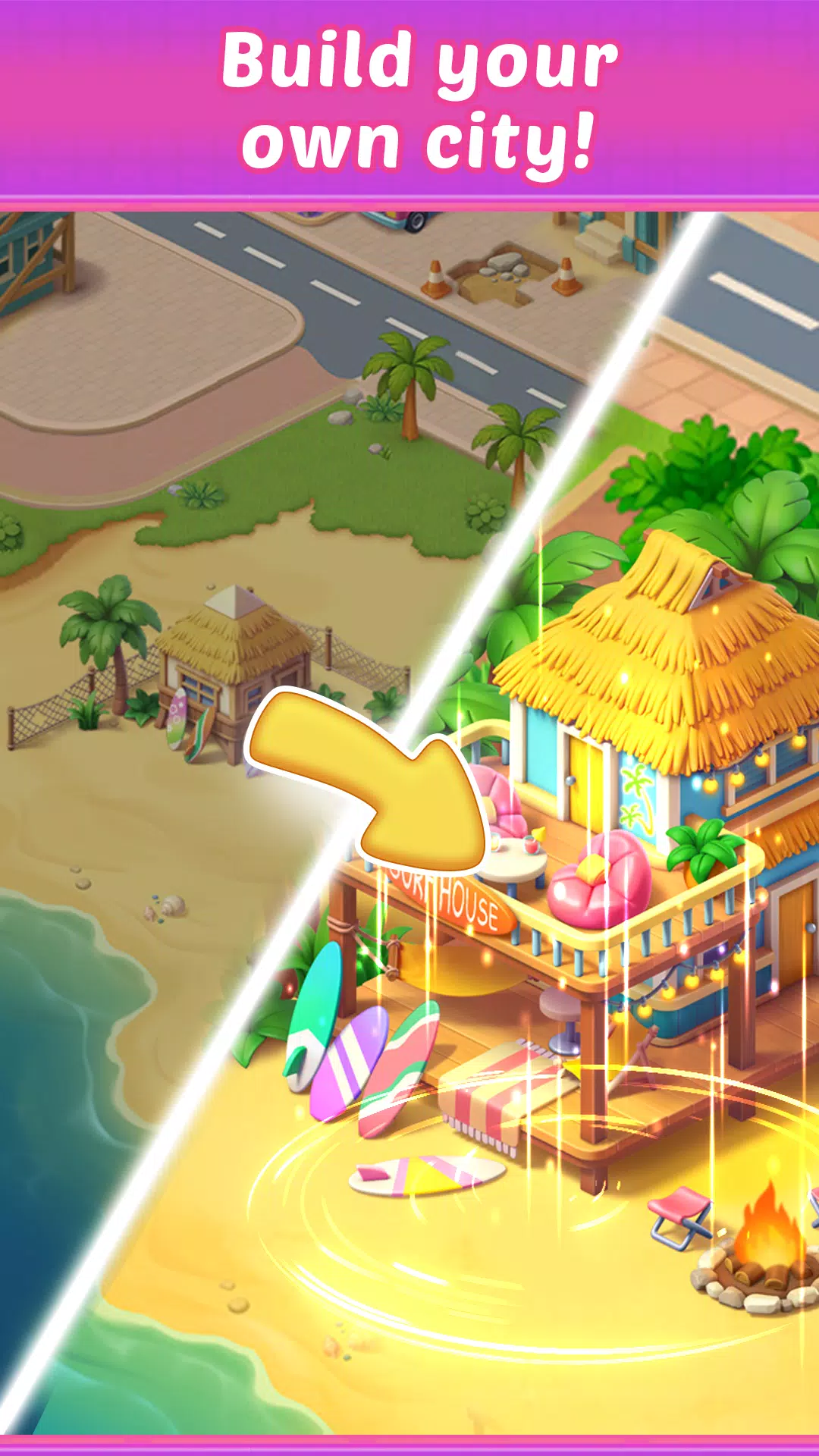
Design is a major appeal of the game: each renovation project offers multiple style options so you can tailor interiors and exteriors to your taste. Furniture, wallpapers, flooring and accent pieces are obtained through merges or event rewards and can be mixed to create distinct rooms from cozy bungalows to retro-inspired villas. Placement is flexible, allowing rotation and repositioning of many items so you can experiment with layouts. Design choices also influence client satisfaction in missions, creating a satisfying feedback loop between puzzle success and creative expression.
Visual Style and Audio
The visual presentation favors warm, retro-tropical colors with hand-drawn character portraits and detailed decorative items that reward close inspection. Environments are bright and inviting, designed to evoke coastal nostalgia without relying on heavy realism. Ambient soundscapes and light musical cues support the relaxed mood; sound effects reinforce merges and placement actions so the game feels tactile. Visual clarity is prioritized so icons, tiles and renovation elements remain readable even on smaller screens.
Level Structure and Challenge Systems
Levels are organized into chapters tied to renovation projects and story beats. Early chapters teach core merge mechanics and simple objectives, while later chapters layer in modifiers such as locked tiles, obstacles that require specific tools, and time-limited goals. These systems create varied challenge types that reward thoughtful planning rather than fast reflexes. The pacing is intentionally measured: players who enjoy methodical puzzle solving and creative renovation will find a steady escalation of difficulty and variety across chapters.
Replay Value, Accessibility and Offline Play
TropicVille encourages replay through optional renovation objectives, collectible decorative sets and recurring events that invite players to revisit earlier areas with new goals. The game is forgiving for casual users: save systems synchronize progress locally and require an internet connection only for optional events and store functions, allowing much of the core experience to be enjoyed offline. Accessibility options include adjustable sound levels and readable UI elements; controls are simple and suitable for players new to merge-puzzle mechanics as well as experienced players seeking deeper strategy.
Player Experience and Limitations
Players who appreciate a mix of creative freedom and puzzle strategy will find TropicVille rewarding, because the game balances low-pressure renovation with meaningful decision-making during merges. Those seeking fast-paced arcade action may find the deliberate progression and narrative focus less appealing, and players who prefer pure puzzle experiences without decorative or story elements should be aware that design and character interaction are core parts of the loop. Overall, TropicVille is designed to be a comfortable, decorative-focused puzzle game with steady progression, visual charm and plenty of customization to keep players returning.
- No virus
- No advertising
- User protection
Information
- File size: 115.00 M
- Language: English
- Latest Version: 1.22.1
- Requirements: Android
- Votes: 271
- Package ID: com.tapclap.merge.tropicville
- Developer: TAPCLAP
Screenshots













Explore More
Small games that help pass the time have evolved into a plethora of cool and refreshing experiences that allow us to briefly immerse ourselves without getting addicted, providing us with plenty of enjoyment even if we can only play them for a short while sometimes.

Car Simulator Online

Tàng Long Bất Bại
Nono Rummy

LuckyMe Slots: Casino Games

Spicy Waitress

MemoryBit

Dawn of the Spins: Social Slot
Naughty Blocks: The White Room’s Secrets