Introduction
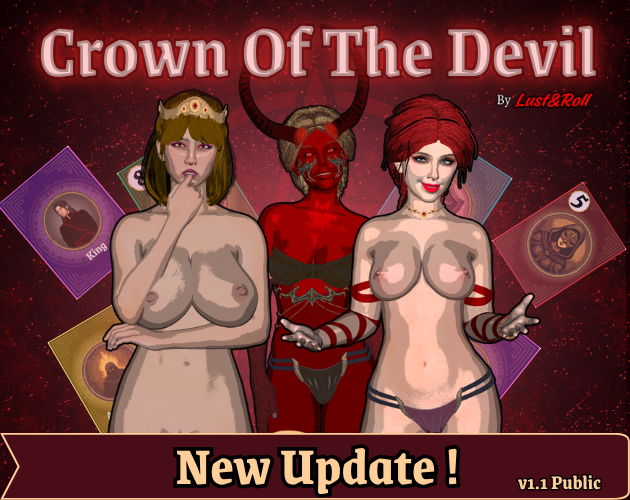
Crown Of The Devil - Public is a dark fantasy roguelike that blends visual novel-style narrative with card-based tactical progression, placing you in the role of a king who has struck a dangerous pact with a demonic force. In each run you pilot a central character card across a branching node map where choices matter: fights, story scenes, shops, and special events appear as nodes, and the items and cards you collect directly reshape subsequent encounters. The public release of Crown Of The Devil - Public emphasizes stability and accessibility while preserving the core loop of discovery, risk, and evolving tactics.
Gameplay and core mechanics
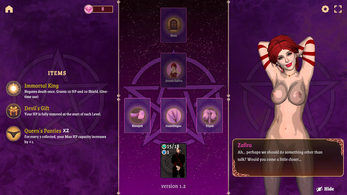
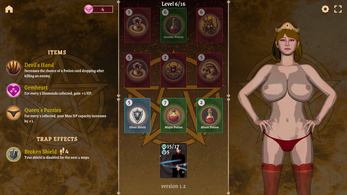
Gameplay centers on a compact deck and card interaction system where each card represents an action, ability, or resource. Moves on the node map reveal enemy groups, traps, narrative encounters, and opportunities to recruit or influence story characters. Combat is resolved through card play and modifiers provided by items or passive bonuses, rewarding players who plan chains of actions and adapt to changing circumstances. Narrative beats are woven into the progression so that choices outside combat can yield permanent effects, new cards, or alternative routes through the map.
Controls and interface
The interface is optimized for touch and traditional controllers; swipes and taps select nodes, drag-and-drop manages card play, and contextual buttons appear during encounters to keep the input simple and responsive. Tooltips explain card interactions and item synergies, and a concise in-game help overlay walks new players through basics like card sequencing and node selection. The layout keeps the active deck and relevant statistics visible without clutter, making it easy to make informed decisions during tense moments.
Progression and item systems
Progression combines run-based advancement with persistent unlocks. Each successful run can unlock new cards, items, or narrative fragments that appear in future attempts, while individual runs depend on the cards and artifacts you pick up along the way. The item system supports meaningful build variety: offensive amplifiers, defensive relics, and utility items create different tactical profiles. Players can experiment with synergies—stacking effects that buff particular card types or that trade short-term gain for long-term advantage.
Visual style and audio
The art direction favors a moody, gothic palette with illustrated character portraits and hand-crafted background panels that set a mature, atmospheric tone without explicit content. Visual novel-style scenes use expressive character art and written dialogue to develop each character encountered during runs. Sound design complements the visuals with ambient tracks, encounter cues, and concise audio feedback for card plays and critical events, all intended to enhance immersion while remaining unobtrusive.
Level structure and encounter design
Each run unfolds across multiple branching maps where node density and encounter types vary to keep exploration meaningful. Some routes prioritize combat, others emphasize story interactions or resource gathering, and special encounter nodes introduce short, self-contained challenges with unique rewards. The roguelike structure encourages route planning: choosing which nodes to pursue influences immediate survival and shapes long-term opportunities for unlocking content and reaching high-tier encounters.
Customization and build diversity
Customization arises from card choices, item pickups, and passive modifiers obtained during runs. Players can tailor their playstyle toward aggressive, defensive, or hybrid approaches, and experiments with unusual combinations are often rewarded by emergent synergies. While the public version does not include multiplayer or online leaderboards, it offers a broad space for personal experimentation and strategy development across multiple sessions.
Replay value and difficulty systems
Replayability is a deliberate focus: randomized map layouts, a wide card pool, and branching story outcomes ensure no two runs feel identical. Challenge systems include adjustable difficulty settings and optional tougher encounters that grant stronger rewards, giving players control over risk versus reward. The learning curve is designed to reward thoughtful play rather than reflex alone, and repeated runs reveal new narrative details and tactical options as permanent unlocks accumulate.
User experience and accessibility
Accessibility features include readable font sizes, color-contrast options for visual clarity, and toggleable text speed for dialogue scenes. The UI supports both casual sessions and extended play, saving run progress and providing clear indicators for permanent unlocks and active modifiers. Players who prefer a more story-driven approach can avoid high-risk routes, while those seeking a tactical challenge can pursue harder paths for exclusive rewards.
Offline play and updates
The public build runs fully offline, allowing play without a network connection and preserving local save data between sessions. Regular updates deliver balance adjustments, new cards, and narrative patches; the development team maintains open communication about upcoming changes and timelines. The app aims to provide a stable single-player experience that evolves over time based on player feedback and careful tuning.
About the developers
The indie studio behind the game actively involves its community through development logs and feedback channels, prioritizing a steady cadence of updates and quality improvements. Crown Of The Devil - Public is offered as a standalone, single-player title with mature themes presented neutrally and without explicit content, and the developers continue to refine mechanics, localization, and accessibility options to broaden its appeal.
- No virus
- No advertising
- User protection
Information
- File size: 85.72 M
- Language: English
- Latest Version: 1.0
- Requirements: Android
- Votes: 254
- Package ID: itchio_crown-of-the-devil-public-v11
- Developer: lustandroll
Screenshots















Explore More
Small games that help pass the time have evolved into a plethora of cool and refreshing experiences that allow us to briefly immerse ourselves without getting addicted, providing us with plenty of enjoyment even if we can only play them for a short while sometimes.

Survival Cover Hunt Shooting

Rolling Ball 3D : Ball Race

Magical Ink
Tactical OPS-FPS Shooting Game
Nuclear Bomb Simulator 2

Asphalt Rush

Super Panda Adventure

Mini Golf Clash